
Capping System and Vibratory Bowl Maintenance
Regular maintenance of the capping system is important to ensure stable operation and consistent sealing performance. The main maintenance items include cleaning the capping head and checking the torque setting.
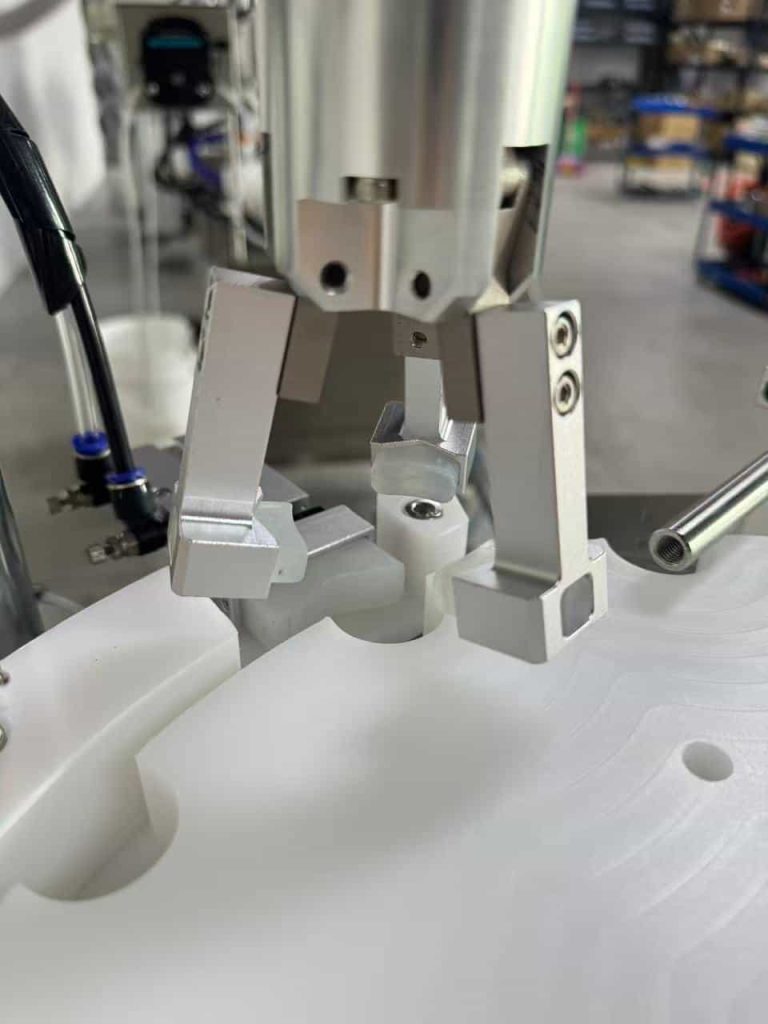
The capping head should be removed and cleaned once a week to remove any accumulated residue and maintain reliable cap handling. The capping torque should be checked and calibrated monthly with a torque tester to ensure the tightening force meets the required production standards. Proper torque adjustment helps prevent issues caused by over-tightening or loose caps.
The air cylinder should be inspected regularly to ensure smooth vertical movement. Pneumatic fittings should be lubricated when necessary to avoid sticking or delayed operation. If abnormal cylinder movement occurs, check the air supply pressure and inspect the cylinder seals for possible wear or damage.
The vibratory bowl feeder and cap delivery system should be cleaned weekly. Remove any dust or product residue from the guide track and sensor areas. Check that the vibration level is stable and that caps are being transferred smoothly. If cap jams or deformation occur during feeding, adjust the guide rail clearance or vibration intensity accordingly.
Keep the photoelectric sensor lens clean at all times. The sensor detection distance should be checked and adjusted periodically to maintain accurate detection.
