
Functional Overview and Core Advantages
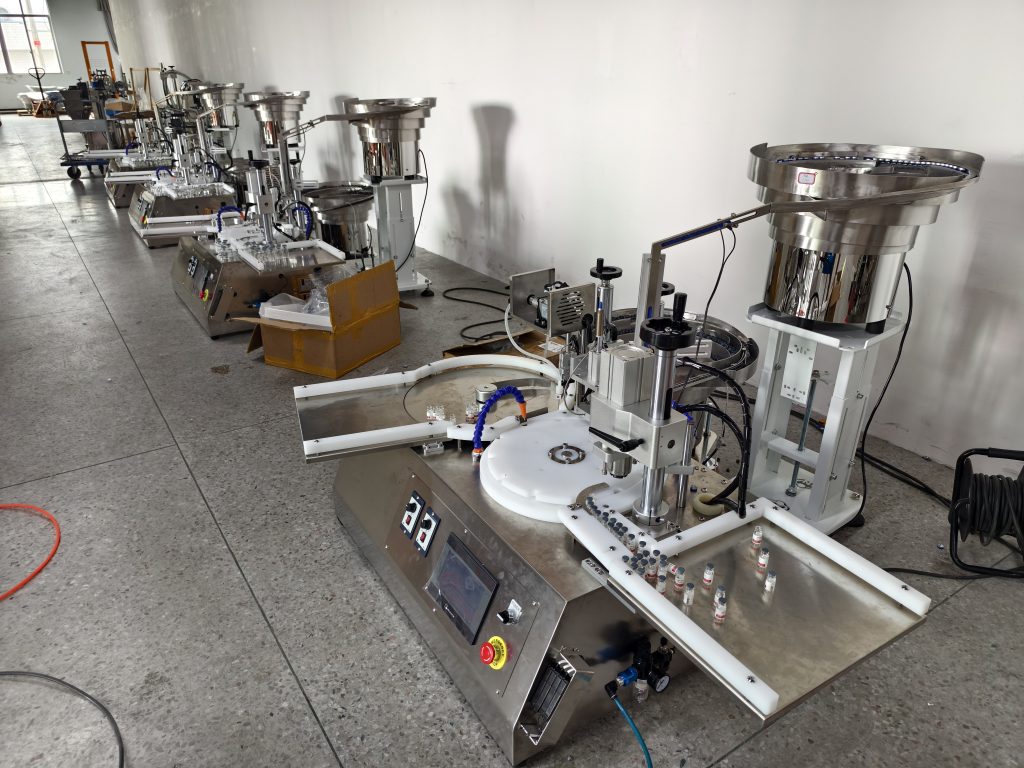
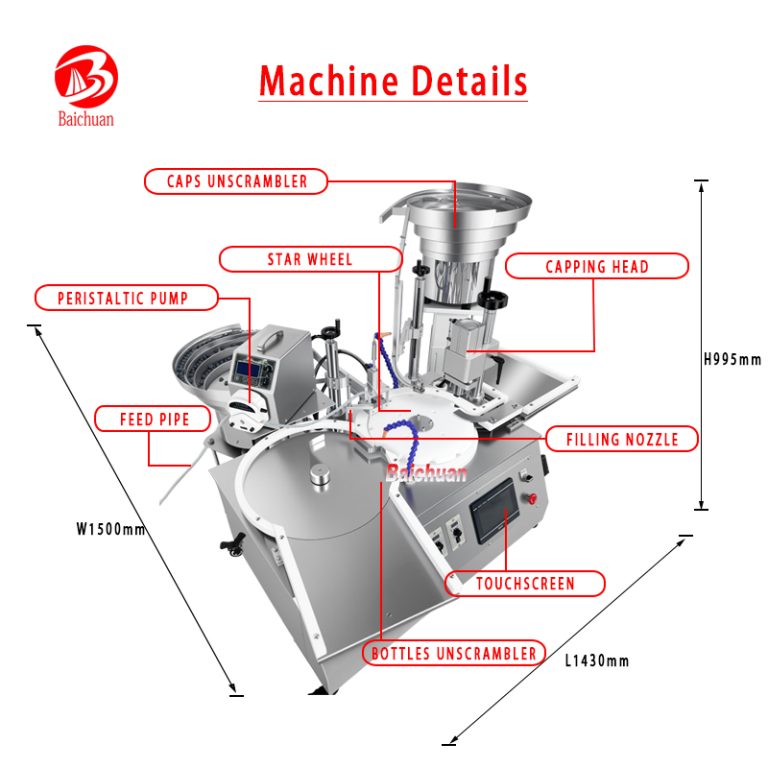
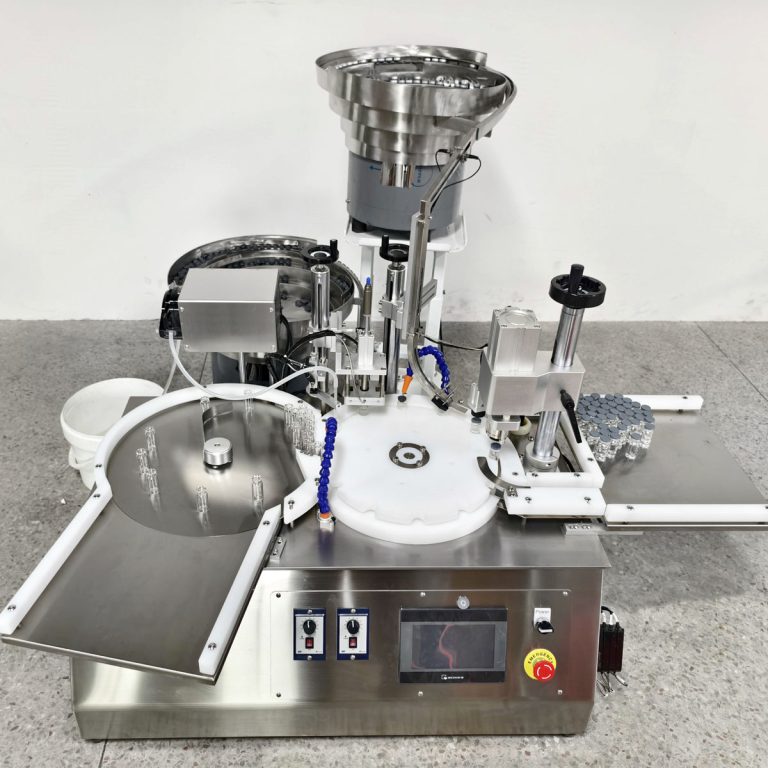
The fully automatic liquid filling and capping machine is a core piece of equipment in modern liquid packaging production lines, integrating four major functions—bottle handling, quantitative filling, automatic capping, and capping and sealing—on a compact platform. It is specifically designed for the dispensing of small-dose glass or plastic bottles such as oral liquids, vials, and ampoules, and can efficiently process products such as cough syrups, enzyme concentrates, health supplement oral liquids, functional beverages, and small-dose reagents.
- Daily/Weekly Cleaning:
- Turn off the power to the vibratory bowl.
- Remove excess caps.
- Thoroughly clean the inner wall of the bowl, the spiral ascending track, and the straight track at the outlet using a soft cloth or brush. Any minor dust or stains may cause cap jams or improper alignment.
- Inspect the track surface to ensure it is smooth and free of any burrs caused by wear and tear.
The machine’s core advantages lie in its high degree of automation and precise control. Employing a peristaltic pump filling system, the liquid only contacts the flexible pump tubing, eliminating cross-contamination. This makes it ideal for filling different batches and formulations of liquids, meeting GMP (Good Manufacturing Practice) cleanliness requirements. Its touchscreen control system integrates parameter setting, manual adjustment, automatic operation, and real-time monitoring, making operation intuitive and simple. Automatic bottle cap sorting and conveying are achieved through a vibrating bowl, combined with a precision capping head, ensuring a tight and consistent seal.
For small and medium-sized pharmaceutical factories, health product manufacturers, and laboratories, this all-in-one machine addresses the key need for upgrading from semi-automation to full automation. It not only significantly improves production efficiency (up to 1400 bottles/hour of 10ml) and reduces labor costs, but more importantly, it ensures product quality and reduces material waste through precise filling volume control (accuracy up to ±1%) and stable capping quality.“